
Updated September 17, 2026: This article was originally published October 15, 2011, and has been revised to correct outdated information, clarify the difference between industrial hemp and marijuana, and reflect what we now know about cannabis history, medicine, and federal law.
At one point, cannabis was woven into everyday life in ways that had absolutely nothing to do with getting high. Hemp was used to make rope, textiles, sails, paper, and other materials, and the plant has also been studied for nutritional, medicinal, agricultural, and industrial uses. I can talk about the positive uses and properties of this plant for hours. I decided to write about ganja, one of the many names associated with marijuana and cannabis, because this conversation has been long overdue. LET’S TALK ABOUT THIS SHIT!!!

Before getting too deep into the history, there is one distinction that needs to be made. Hemp and marijuana both come from cannabis plants, but they are not interchangeable. Industrial hemp has historically been grown primarily for fiber, seeds, oil, textiles, and other practical uses, while marijuana generally refers to cannabis cultivated for higher concentrations of THC and its intoxicating or medicinal effects. That distinction matters because a lot of the historical conversation about cannabis in early America was really about hemp.
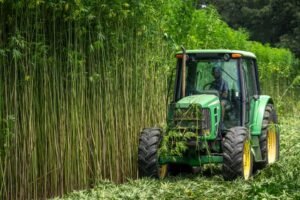
George Washington grew hemp at Mount Vernon, primarily for practical uses such as rope, thread, canvas, and fishing nets. Thomas Jefferson also cultivated hemp at Monticello. Cannabis was not some mysterious plant that suddenly appeared in American culture during the twentieth century. Hemp had already been part of agriculture and industry for generations, long before modern drug policy reshaped the way people thought about the plant.
As industrialization expanded, however, the materials we depended on began to change. Wood pulp became dominant in paper production, while petroleum became deeply embedded in transportation, manufacturing, plastics, and nearly every other part of modern life. Hemp gradually became less important to American industry. Meanwhile, we built damn near everything around fossil fuels and are now dealing with the environmental consequences of that dependence. That does not mean hemp could magically replace petroleum overnight or solve climate change by itself, but it does mean that the plant has continued to attract interest as a renewable source of fiber, oil, building materials, and even potential biofuels.
 Then there is the medicinal conversation. Using cannabis medicinally is not some brand-new trend created by modern dispensaries. Cannabis has been used medicinally in different cultures for centuries, and today cannabis and cannabinoids are used by some patients to address symptoms including chronic pain, nausea, muscle spasticity, and other medical problems. The evidence and effectiveness vary depending on the condition and the specific cannabis product being used, but the larger point is that the idea of cannabis having medical value did not suddenly appear in modern times.
Years ago, I remember watching Montel Williams publicly discuss using medical marijuana while living with multiple sclerosis. At the time, hearing somebody with a serious chronic illness openly discuss marijuana as medicine felt almost radical. All I could think was, why is this plant still treated the way it is? That question becomes even more complicated when you look at its legal history and how aggressively cannabis policy changed during the twentieth century.
 Federal restrictions against marijuana increased dramatically during the early 1900s. One of the most important moments came with the Marihuana Tax Act of 1937. The law did not technically ban marijuana outright, but it created taxes, registration requirements, and penalties that made possession and distribution increasingly difficult. Cannabis policy became even more restrictive with the Controlled Substances Act of 1970, which classified marijuana as a Schedule I controlled substance under federal law. Schedule I is reserved for substances considered to have a high potential for abuse and no currently accepted medical use under federal standards.
That creates a contradiction that is hard to ignore. Marijuana is legally available for medical use in many states, yet it remains heavily restricted under federal drug law. Hemp, on the other hand, was removed from the Controlled Substances Act under the 2018 Farm Bill as long as it falls within the federal THC limit. State governments have moved in one direction on marijuana while federal policy has continued operating under a much older framework. At the same time, it is also important to be honest about the fact that marijuana is not 100% harmless.
There is another part of this history that makes the entire story even more interesting. During World War II, the United States government actually encouraged American farmers to grow hemp because imported fiber supplies had been disrupted. The government promoted domestic hemp production to help supply materials needed during the war. That means a plant the government once encouraged American farmers to grow later became wrapped inside decades of criminalization, drug enforcement, political rhetoric, and cultural stigma.
That transformation did not happen overnight, and that is exactly why this conversation deserves more than the tired debate over whether somebody should or should not be allowed to smoke weed. Cannabis has an industrial history, a medicinal history, an agricultural history, a political history, and a complicated legal history. The more you learn about this plant, the harder it becomes to reduce the entire conversation to people getting high. It is funny how the same plant the U.S. government encouraged American farmers to grow during World War II eventually became treated like a menace to society.
Very Good,..well done