One of the most interesting questions to come out of the recent conversation surrounding content creator Nara Smith has very little to do with whether she is or is not a tradwife. The more I listened to people debate her interview and watched the internet argue over her image, the more I found myself thinking about something much bigger. What happens when the internet sees you differently than you see yourself? Better yet, who actually owns your brand once millions of people have spent years consuming it? Is it still yours to define, or does your audience eventually become part of that conversation whether you like it or not? Because while personal growth can happen almost overnight, public perception rarely moves that fast. The person behind a brand can evolve long before the audience is ready to see them differently.

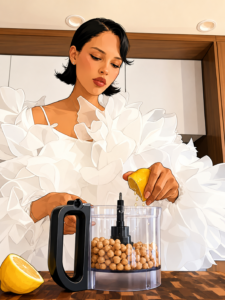 For the last couple of years, Nara Smith has become one of the most recognizable faces associated with what many people call the tradwife aesthetic. Her videos featured elaborate meals made entirely from scratch, a polished home life, beautiful cinematography, and an almost dreamlike presentation of domestic living. Whether it was homemade cereal, bread, pasta, or meals most people would never attempt to prepare from scratch, the consistency of her content created a very specific image in her audience’s minds. It was not one or two videos. It became an entire brand.
Recently, however, Nara appeared on the Call Her Daddy podcast and pushed back against being labeled a tradwife. She explained that she works, has a career, and does not personally identify with that label. Watching the interview honestly caught me off guard because the version of Nara sitting on that couch felt noticeably different from the version many people had become familiar with online. She dressed differently, spoke differently, and presented herself in a way that immediately sparked conversation across social media. Whether that change represents growth, a rebrand, or the difference between someone’s online persona and their real personality is ultimately something only she can answer.
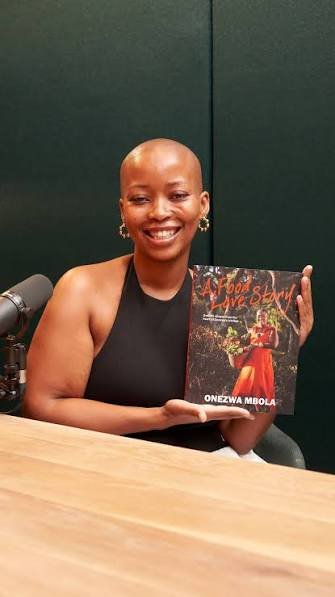
The discussion became even more layered because this was not the first controversy attached to her brand. Over the past year, South African creator Onezwa Mbola publicly accused Nara of copying aspects of her content style and presentation. Those allegations have been strongly disputed, and they have never been conclusively proven. That distinction matters because fairness matters. I am not interested in presenting accusations as facts. What interests me is how those accusations became part of a much larger conversation about originality, authenticity, and the way creators build online identities.
That is where I think the internet sometimes misses the point. This conversation is bigger than Nara Smith. It is really about branding. We often hear people say that creators should be free to evolve, and I agree. People are supposed to grow. Interests change. Priorities shift. People enter different seasons of life. The challenge is that audiences are not consuming our intentions. They are consuming patterns. If someone spends years presenting themselves in a particular way, people naturally begin to associate them with that identity. That does not necessarily mean the audience is right, but it also does not mean they invented the perception out of nowhere. Brands are built through consistency, and consistency teaches people what to expect, DUH!
At some point or another, every creator eventually runs into this problem. Actors become forever associated with that one role. Musicians become trapped by one song, album, show, etc. Authors become known for writing one type of book. Businesses become identified with one type of product or service. Even us regular folks experience this every day. We spend years showing the world one version of ourselves, and then we become frustrated when people struggle to accept that we have changed. Personal growth often happens much faster than public perception. Furthermore, let’s be real. Nara is in her early 20’s. Even if her initial image was being a tradwife, why can’t she change her mind? She is a woman, for pete’s sake.
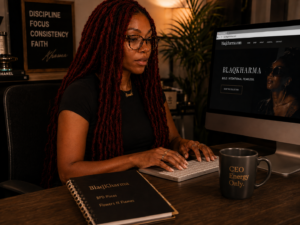
As someone who owns multiple brands, this conversation made me stop and reflect on my own work. BlaqKharma, BPD Pisces, and Flowers N Flames each have a different voice because they were intentionally created to serve different purposes. Every article I write, every product I release, every image I create, and every conversation I have contributes to how people understand those brands. That realization comes with both freedom and responsibility. I have the freedom to tell my story however I choose, but I also have to accept that people will interpret that story based on what I consistently show them over time.
I have been running BlaqKharma.com for over 17 years now. If you look back at my first articles in 2009 and look at an article post in 2026, you will notice so many differences. That is because both pieces were written by two totally different people. Me in my early 20’s with no children, chasing Atlanta life. Then you see it change from “Kharma’s World” to “BlaqKharma” and you see the articles take a street journalism style. Then you look at what I publish today, as a mother and as a woman who chose to keep writing through every era of my life. We are complex. We are allowed to become different people.” I completely understand what Nara Smith is doing, and I am HERE FOR IT!
 The reason this entire conversation is still sticking with me has very little to do with deciding whether someone is or is not a tradwife. Instead, it forces me to ask a much more interesting question. At what point does the image we create begin to belong to the people consuming it? Can we simply announce that we are something different and expect everyone to immediately see us that way, or do we have to patiently earn that new understanding through consistent actions over time? I honestly do not know if there is a perfect answer.
What I do know is that branding has always been a conversation between the creator and the audience. We create the image, but the audience creates the perception. Somewhere between those two things is where every public identity eventually lives. That is why this conversation is worth having. It is not really about one influencer, one interview, or one controversy. It is about every creator who has ever looked at the image they built and wondered whether it still belongs to them.